What is a packing slip and why include one?
It is the contents list travelling with the goods: order number, buyer, items, quantities and price. The buyer opens the parcel, checks it against the slip, and the transaction is closed in her mind.
Without one, an “item missing” message is your word against hers and you usually pay. With one, both of you are reading the same list — and disputes on 2-item and 3-item orders drop noticeably.
It also carries your shop name and number into her house. A buyer who wants to reorder in 6 weeks has your number on paper, not buried in a chat from March.
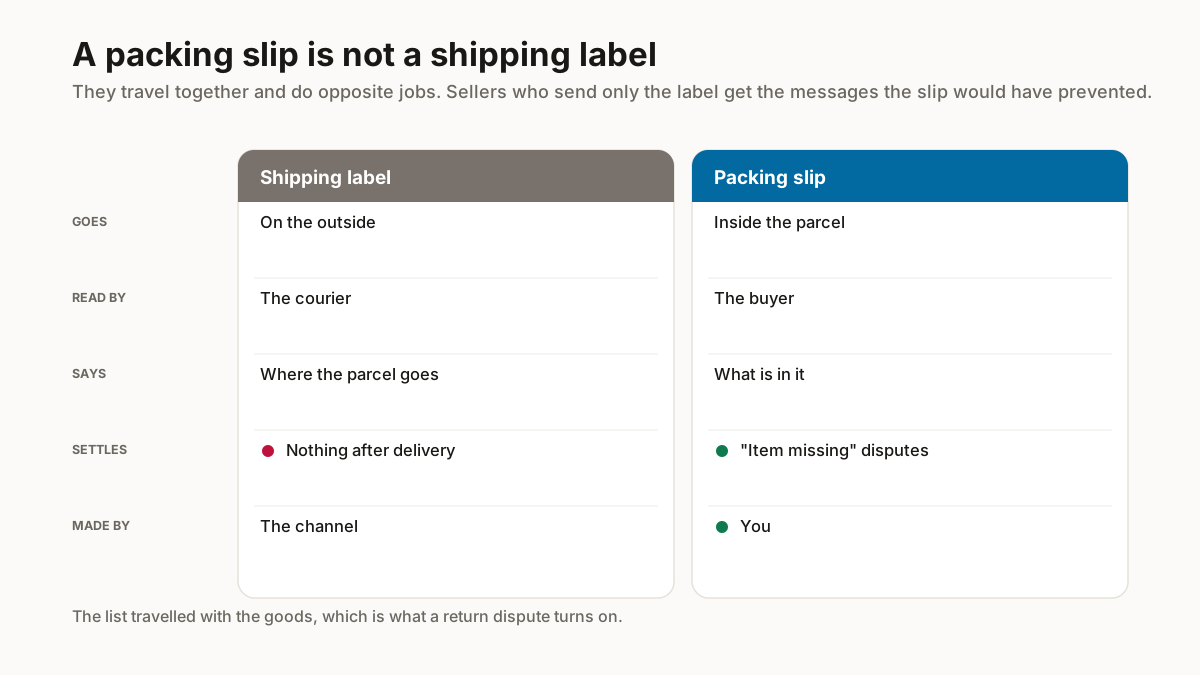
How is a packing slip different from a shipping label?
Position and purpose. The shipping label is stuck on the outside and exists for the courier — address, PIN, barcode. The packing slip sits inside and exists for the buyer.
They carry different information deliberately. A courier does not need your item list; a buyer does not need the routing barcode. Printing one and calling it the other leaves a gap either the courier or the customer falls through.
Most Indian marketplaces generate the shipping label for you and none of them generate a packing slip, which is why so few parcels contain one.
What should a packing slip include?
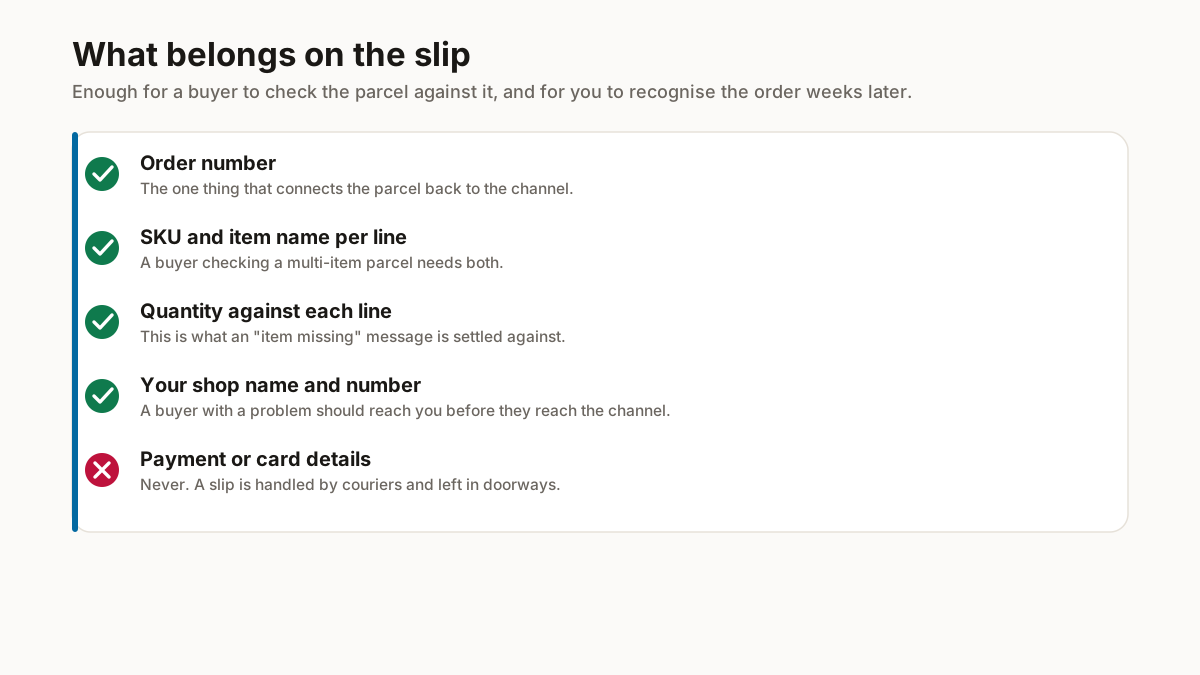
6 things: your shop name and phone, the order number, the buyer name and address, the item list with SKU and quantity, the total, and one line of thanks. Anything else is decoration.
Put the SKU on every line. When a return arrives 10 days later, the SKU is what tells you which piece came back without unwrapping and guessing.
Print 2 copies for high-value orders — one inside, one kept. A dispute 3 weeks after dispatch is much easier when you can see exactly what the slip said.
How does a slip help when a buyer disputes an order?
Because it puts a written record of the contents inside the parcel, at the moment of packing, in the buyer’s own hands. When someone messages to say an item is missing, the conversation stops being one memory against another and becomes a question about a document you both have.
In practice most of those messages are honest confusion rather than a dispute. Multi-item parcels get unpacked in a hurry, a small item stays wrapped inside a larger one, and the buyer counts three things where the order had four. A slip listing each line with its quantity resolves that in 1 reply instead of 5.
It also changes the tone of the ones that are not honest. A seller who includes a slip in every parcel is visibly running a process, and that is a meaningfully different position to argue from than one who is reconstructing what was probably sent.
Where it genuinely helps least is a damage claim, because a slip says what was sent and not what condition it arrived in. For that, a photograph of the packed parcel before it goes out is the equivalent record.
What does the slip do for you after the sale?
It makes a returned parcel identifiable. A garment that comes back with no paperwork is a puzzle — which order, which channel, which buyer, and was it refunded already. A slip travelling back inside the parcel answers all of that before you have opened your laptop.
The slip also gives a buyer a way to reach you directly. A shop name and a 10-digit number on it mean a problem arrives as a WhatsApp message you can fix, instead of as a channel complaint that costs you a rating first and reaches you second. That single line is arguably the most commercially useful thing on the page.
Printing is worth thinking about once, not every day. A slip sized to fit 2 to an A4 sheet halves the paper cost, and at 200 orders a month that is 100 sheets instead of 200. Plain paper is fine; nothing about the document needs to be beautiful.
One thing that must never go on it: payment details. A packing slip is handled by couriers, left in doorways and photographed by buyers, so card numbers, UPI references and anything resembling a credential do not belong anywhere near it.
Related free seller tools
Frequently Asked Questions
What is a packing slip?
A contents list that goes inside the parcel — order number, buyer, items, quantities and price. The buyer checks the parcel against it, which is what settles an item-missing dispute.
Is a packing slip the same as a shipping label?
No. The shipping label goes on the outside and exists for the courier — address, PIN, barcode. The packing slip goes inside and exists for the buyer. They carry different information deliberately.
Do I need a packing slip for Meesho or Flipkart orders?
The marketplace generates your shipping label but none of them generate a packing slip. Including one is optional and it is what reduces item-missing claims on multi-item orders.
What should a packing slip include?
Shop name and phone, order number, buyer name and address, item list with SKU and quantity, the total, and one line of thanks. The SKU matters most — it tells you which piece came back when a return arrives.
Do I need special paper or a printer?
No. A packing slip prints on ordinary A4 from any printer, and this tool prints through your browser so there is nothing to install and nothing uploaded.
Does a packing slip help with return disputes?
Yes, because it puts a written record of the contents inside the parcel at the moment of packing. Most "item missing" messages are honest confusion over a multi-item parcel, and a slip listing each line with its quantity resolves them in one reply.
What should never go on a packing slip?
Payment details of any kind. Slips are handled by couriers, left in doorways and photographed by buyers, so card numbers, UPI references and anything resembling a credential do not belong on one.
Free, no signup. Everything runs in your browser — nothing is uploaded.