The 4 Core Lehenga Silhouettes Compared
Every lehenga in existence falls into one of these four structural categories. The names vary by region and by shop — what one Surat wholesaler calls a fishtail, a Delhi boutique calls a mermaid — but the underlying construction is the same four shapes, and knowing which one you are looking at tells you more than any photograph will.
Read the fabric column carefully, because it is the one that quietly sets the price. A circular lehenga needs twelve to eighteen metres against a panelled one’s five to eight. On a mid-range silk that difference is thousands of rupees in cloth alone, before a single stitch of embroidery. It is also why a heavily flared lehenga in an ordinary fabric often photographs better than a restrained one in an expensive fabric: the volume is doing work the cloth would otherwise have to do.
The second thing the table will not tell you is weight. A full circular lehenga with can-can lining and dense embroidery becomes genuinely heavy, and it is worn for six hours or more, usually while standing. If you are choosing between two silhouettes you like equally, choose the lighter one — nobody has ever regretted that by the end of a wedding day.
| Silhouette | Shape | Best Body Type | Fabric Required | Price Range |
|---|---|---|---|---|
| A-Line | Fitted waist, gradually flaring to hem | All body types (universally flattering) | 6-10 meters | ₹15K - ₹3L |
| Mermaid / Fishtail | Body-hugging waist to knee, dramatic flare below | Hourglass, tall, slender frames | 8-12 meters | ₹30K - ₹5L |
| Circular (Kalidar) | Maximum volume, full 360° flare from waist | Tall frames, average to slim builds | 12-18 meters | ₹25K - ₹8L |
| Panelled (Straight) | Vertical panels, slim profile, minimal flare | Petite, plus-size (creates vertical lines) | 5-8 meters | ₹12K - ₹2L |
Gallery: Lehenga Designs 2026 Visual Inspiration
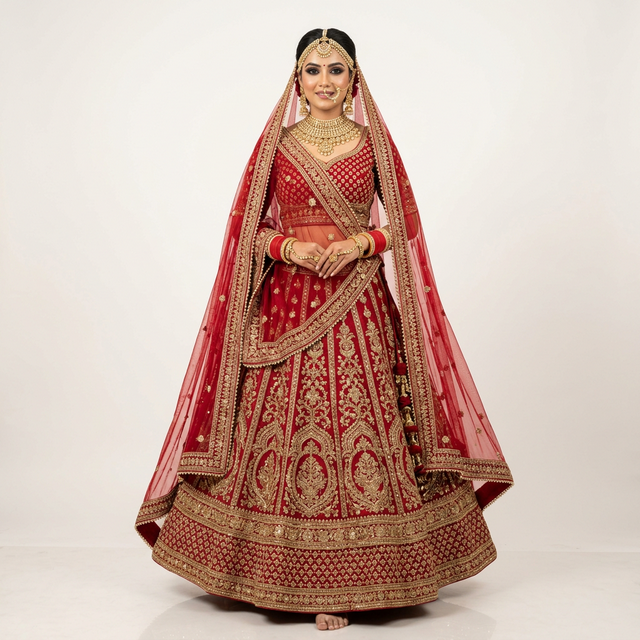
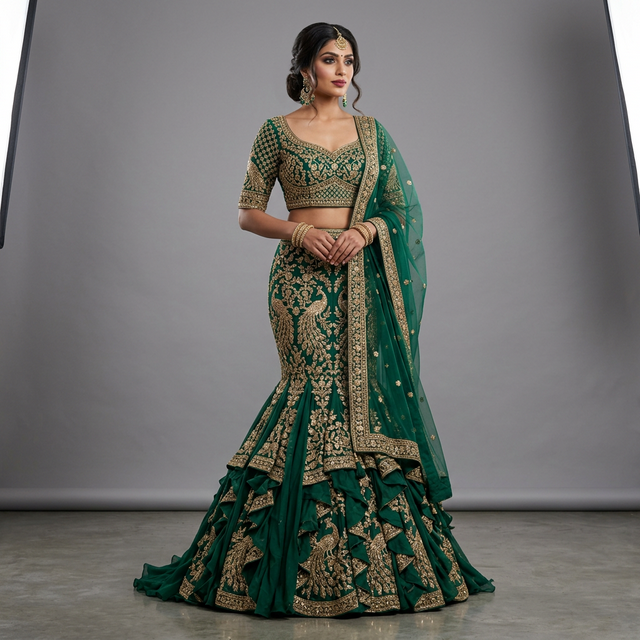
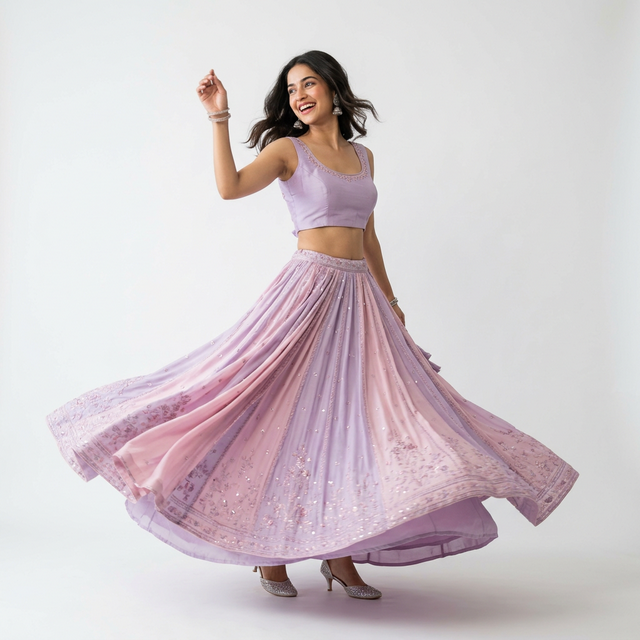
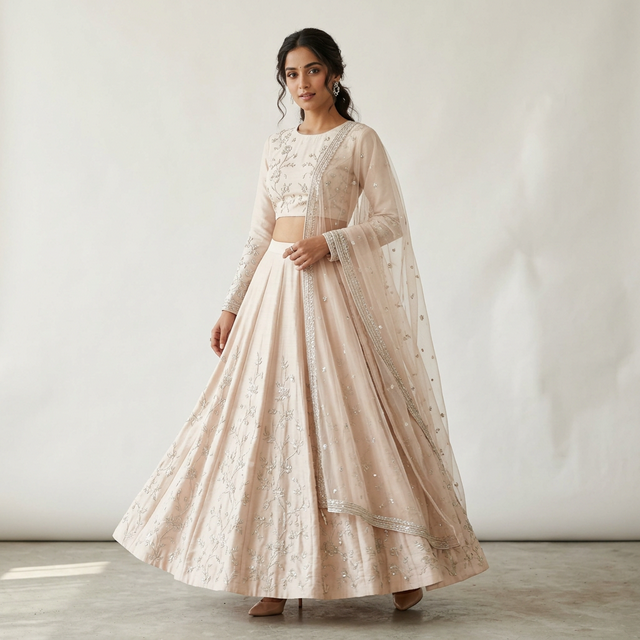
Which Lehenga for Your Body Type?
The golden rule: your lehenga silhouette should balance your proportions, not match them.
Balance means adding volume where you are narrow and removing it where you are not, so that the eye reads a continuous line rather than a widest point.
If you are broad at the hips, avoid circular lehengas that add more volume. If you are petite, avoid heavy floor-sweeping mermaid cuts that shorten your frame.
Pear Shape (Wide Hips)
Best: A-line. Skims over hips while the gradual flare balances the silhouette.
Avoid: Mermaid (clings to hip area) and heavy circular (adds volume below waist).
Hourglass (Balanced)
Best: Mermaid. Celebrates your natural curves beautifully from waist to knee.
Also works: A-line and panelled — virtually any silhouette flatters an hourglass frame.
Petite (Under 5'2")
Best: Panelled with vertical embroidery lines. Creates visual height without volume.
Avoid: Heavy circular with multi-layered flounces — overwhelm a smaller frame.
Plus Size
Best: A-line with a structured waist band. Defines the waist while the flare flatters below.
Avoid: Stiff brocade mermaid cuts — choose flowing fabrics like georgette or crepe silk.
Occasion Mapping: Which Lehenga for Which Event?
An Indian wedding is several events rather than one, and the mistake that costs the most money is dressing every function at bridal weight. The ceremony that warrants full zardosi is usually a single afternoon; the sangeet, mehendi and reception around it each want something you can move, dance and sit down in.
A practical way to plan the set is to decide which single outfit carries the heaviest work, then deliberately step the others down in both embroidery and weight. Guests photograph all of them, but only one needs to hold up under close inspection. Buying three near-identical heavy lehengas is the most common way to spend a wedding budget badly.
| Occasion | Recommended Silhouette | Fabric | Embroidery Level |
|---|---|---|---|
| Wedding Phera | A-line or Circular | Raw silk, Velvet, Brocade | Heavy (Zardosi, Zari, Stone) |
| Reception | Mermaid or Panelled | Velvet, Satin, Organza | Medium-Heavy (Mirror, Cutdana) |
| Sangeet / Mehendi | Circular (for twirling) | Georgette, Net, Crepe | Light-Medium (Sequin, Thread) |
| Party / Festive | A-line or Panelled | Crepe Silk, Chanderi, Art Silk | Light (Thread, Minimal Sequin) |
Budget Tier Guide: What You Get at Each Price Point
What changes as the price climbs is not the amount of embroidery — an entry-level lehenga can be densely worked — but who did it and on what base. Machine embroidery on art silk reads well in photographs and at a distance. Hand zardosi on pure silk reads well when someone is standing beside you, which at a wedding they continuously are.
The tier that surprises people is the middle one. There you are mostly paying for fit rather than fabric: a blouse cut to your measurements over two or three trials, a waistband that sits where it should, a length finished for the exact heel you intend to wear. That is the spend that changes how a lehenga looks on a person rather than on a hanger, and it is invisible in every photograph you will use to shop.
One caution applies at every tier. A quoted price often excludes the blouse stitching, the fall and pico, and the alterations, and those add up to a meaningful fraction on an entry-level piece. Ask what is included before comparing two quotes, because shops differ on this and the cheaper number is not always the cheaper lehenga.
- ₹12K - ₹50K (Entry-Level Bridal)Art silk or georgette base, machine embroidery, lightweight can-can lining. Best from Surat and Jaipur wholesale markets.
- ₹50K - ₹2L (Mid-Range Designer)Pure silk or velvet base, hand-embroidered zardosi or aari work, customized blouse fitting. Available from boutique designers and platforms like StitchMagic.
- ₹2L+ (Luxury / Couture)Heritage weaves (Banarasi, Paithani), full handwork zardosi with real badla, custom fitting with multiple trials. Labels like Sabyasachi, Manish Malhotra, Anita Dongre.
Love This Design? See it on Your Fabric
Don't just browse — upload your fabric and see it come to life as any of these lehenga silhouettes instantly using our AI Studio.
Try Design Visualizer Free →Explore More Design Libraries:
Frequently Asked Questions
Which lehenga silhouette is best for a pear-shaped body?
An A-line lehenga is the most flattering silhouette for pear-shaped bodies. It skims over wider hips and creates a balanced, elongated look. Avoid mermaid cuts which cling to the hip area.
What is the difference between a mermaid and a fishtail lehenga?
Both terms refer to the same silhouette — fitted from waist to knee, then flaring out dramatically. "Mermaid" is the international fashion term; "fishtail" is the Indian term. The flare typically starts at or just below the knee.
How much fabric is needed for a circular lehenga?
A full circular (kalidar) lehenga typically requires 12-18 meters of fabric depending on the number of panels (kaalis). A semi-circular lehenga requires 8-12 meters. Use StitchMagic's fabric calculator for exact measurements.
What lehenga style is trending for 2026 weddings?
For 2026, the top trends are: (1) pastel minimal lehengas with silver threadwork for day weddings, (2) jewel-toned velvet mermaid lehengas for receptions, (3) cape-style blouses replacing traditional dupattas, and (4) lehengas with detachable trains for the phera ceremony.
Can I wear a lehenga if I am petite (under 5'2")?
Yes — choose an A-line or straight panelled lehenga with vertical embroidery patterns. Avoid heavy flared circular lehengas that overwhelm a petite frame. Pair with a high-waisted choli and 3-inch heels to add height.