What makes a SKU worth having
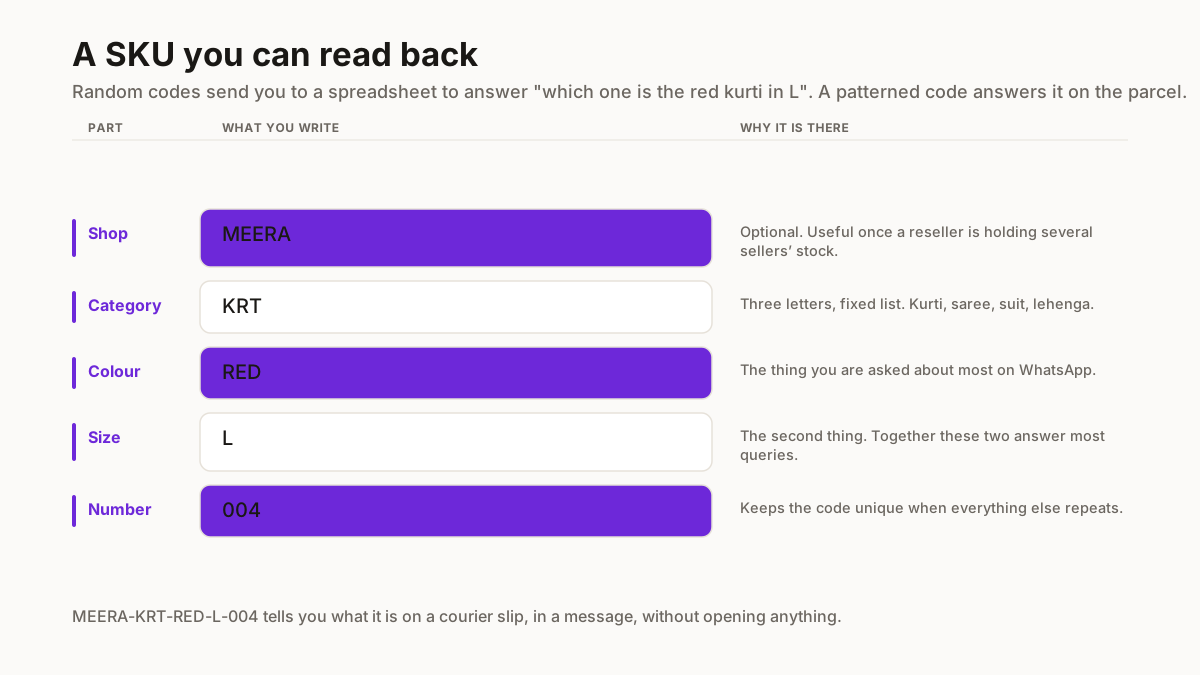
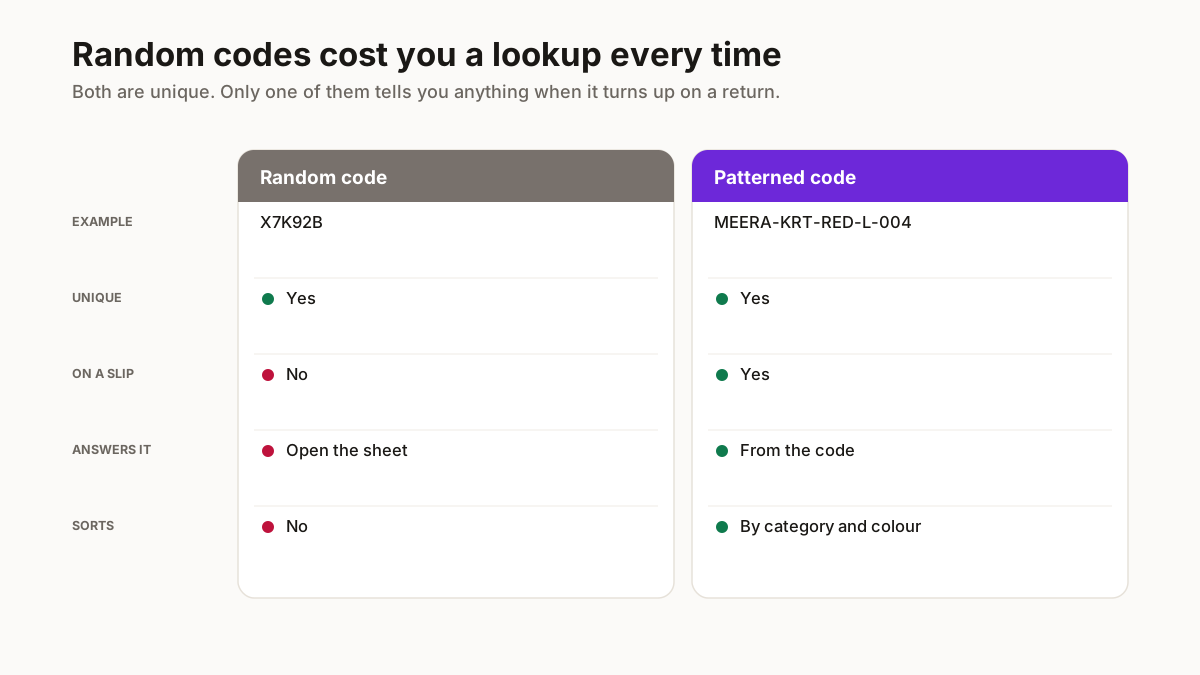
A SKU is only useful if you can read it back. Sellers who generate random strings end up opening a spreadsheet every time someone asks “which one is the red kurti in L” — which is exactly the work the SKU was supposed to remove. A good code answers that question on its own, on a courier slip, in a WhatsApp message, on a carton label.
The pattern this tool uses is shop-category-colour-size-number. So MEERA-KRT-RED-L-004 is readable at a glance by you, by your packer, and by anyone helping you dispatch on a busy day. The number at the end keeps it unique even when the same product comes back in a new lot.
Keep the code short enough to write by hand. Anything past about twenty characters stops being written on a polybag and starts being skipped, and a SKU that gets skipped is worse than no SKU.
How to use these codes once you have them
Put the SKU in three places and it starts paying for itself. First, in the marketplace listing — both Meesho and Flipkart accept a seller SKU field, and that is what ties a settlement line back to a product. Second, on the physical stock, on a slip inside the polybag. Third, in your own stock register.
Rename your photo files to match. A folder where the image is called MEERA-KRT-RED-L-004.jpg rather than IMG_20260818.jpg removes the single most common listing error, which is uploading the wrong colour against the right title.
Download the CSV and keep it as your master list. When you add a new lot, start the numbering where the last one ended rather than at 001, so no two products ever share a code.
What breaks when SKUs are inconsistent?
Reconciliation, first. A settlement report lists what sold by code, and if the same product went out under 3 variations of its code across 3 months, working out what a style actually earned becomes an afternoon of matching instead of a sort. Sellers usually discover this at exactly the moment they need the answer quickly.
Stock counts break next. Two codes for one product means the register says you have 4 pieces of one thing and 3 pieces of another when you have 7 pieces of the same kurti, and the gap between the book and the shelf is what produces an oversell on a channel that trusted the number.
Returns get slower too. A parcel comes back carrying a code, and if that code does not match anything in your list you are opening the bag to identify a garment you have handled before. One consistent scheme turns that into a lookup you do without stopping.
None of which shows up in the first month. It shows up at around the point the catalogue passes 50 sizes and colours, which is precisely when going back to fix it is most expensive.
How do you extend a scheme without breaking it?
Add positions, never redefine them. If you started with category, colour, size and a number, and you now need to distinguish 2 sellers you buy from, that becomes a new segment on the end rather than a new meaning for an existing one. Codes already printed on slips and stored in reports stay valid.
Keep the segment lengths fixed. 3 letters for a category and 3 digits for the number means codes sort predictably in a spreadsheet, and a column of codes that sorts correctly is worth more than one that reads slightly better.
Retire codes rather than reusing them. A number freed up by a discontinued product looks like a tidy opportunity, and it means a return from 6 months ago now matches a completely different garment. Numbers are the cheapest thing in this system.
Write the scheme down somewhere other than your head. A single line explaining what each segment means is what lets someone else pack a parcel, and what lets you rebuild the logic after a season away from it.
Related free seller tools
Frequently Asked Questions
What happens if my SKU codes are inconsistent?
Reconciliation and stock counts both break. A settlement report lists sales by code, so one product under 3 code variations takes an afternoon to total instead of a sort — and a register showing 2 codes for 1 garment is how an oversell happens across 2 channels that trusted the number.
Can I reuse a SKU code from a discontinued product?
No. A return arriving 6 months later would match a completely different garment. Add new numbers instead — they are the cheapest thing in the system.
What is a SKU code?
SKU stands for Stock Keeping Unit. It is a short code you assign to one exact product variant — a specific style in a specific colour in a specific size — so that you, your marketplace listing and your stock register are all talking about the same thing.
How do I create SKU codes for my products?
Use a readable pattern rather than random characters. Category, colour, size and a running number covers almost every clothing business: KRT-RED-L-004 tells you it is a red kurti in large. This tool builds every combination for you and exports a CSV.
Does Meesho need a SKU?
Meesho asks for a seller SKU when you list, and it is what connects a settlement line back to a product. You can type anything, but a consistent readable code is what makes your payment reports legible three months later.
How many characters should a SKU be?
Short enough to write by hand on a polybag — roughly twenty characters or fewer. Longer codes get skipped during a busy dispatch, and a skipped SKU is worse than none at all.
Is this SKU generator free?
Yes. No signup, no limit, and nothing is uploaded — the codes are generated inside your browser, so it works on a weak connection.
Free, no signup. Everything runs in your browser — nothing is uploaded.