Why can most sellers not simply join Myntra?
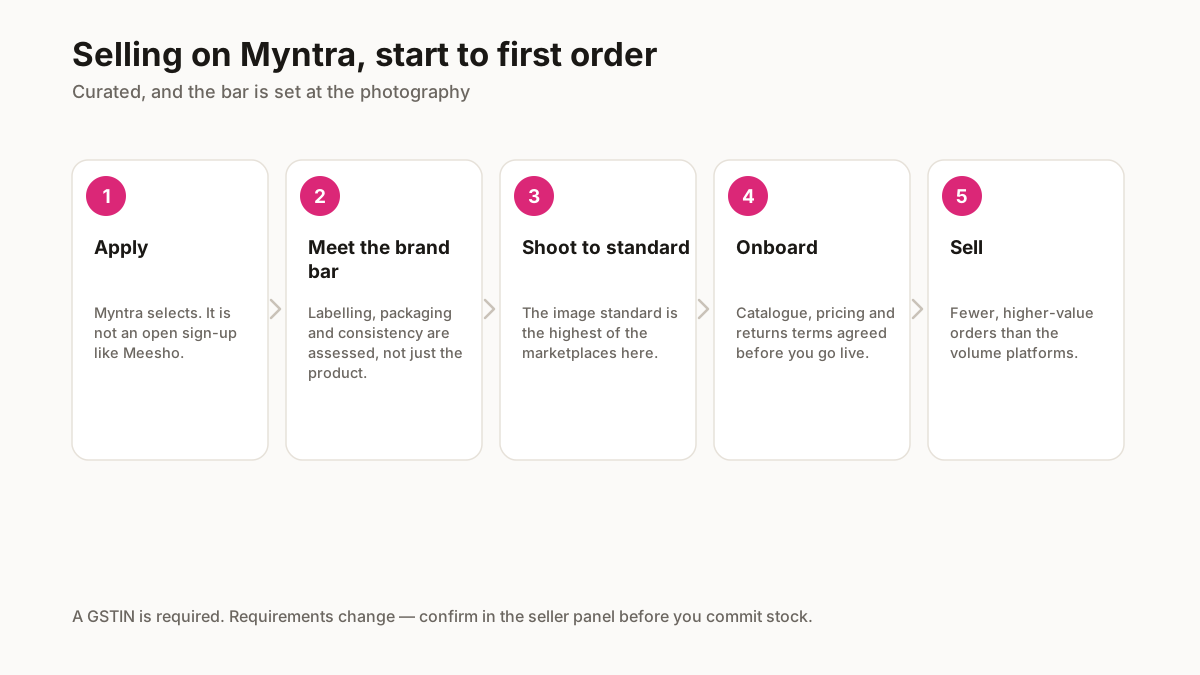
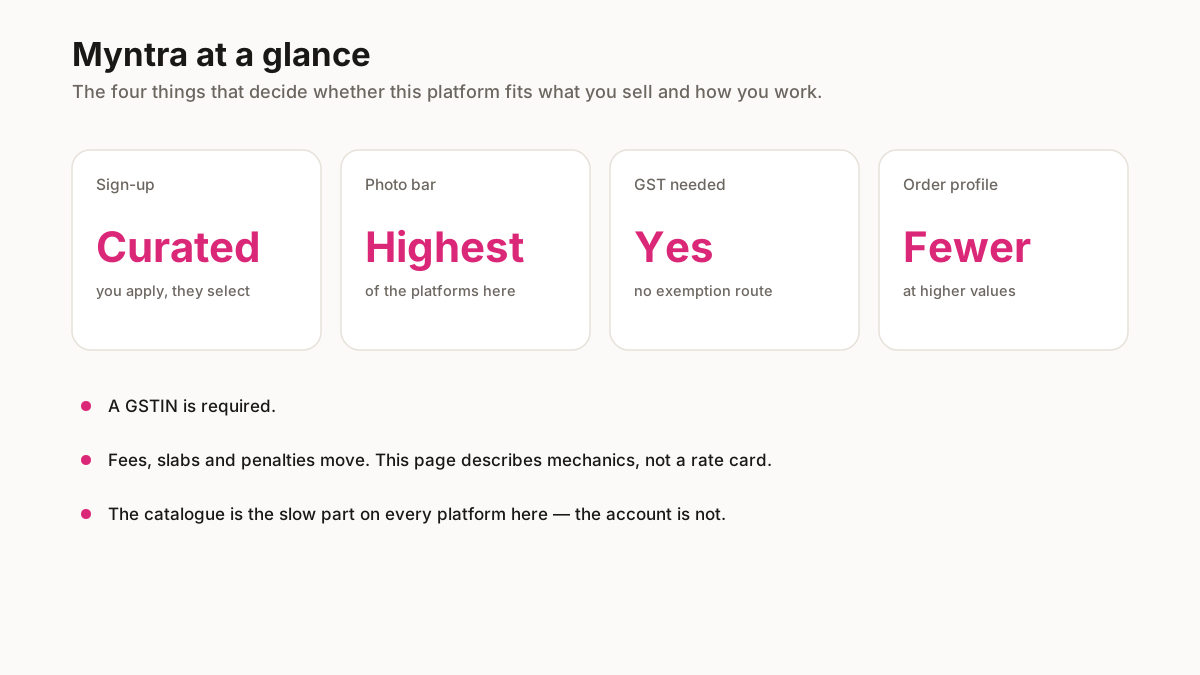
Because Myntra curates. Unlike Meesho or Flipkart, it does not accept open marketplace registration from anyone with a GST number — you need a brand, and usually a registered trademark or documented authorisation to sell someone else's.
That gate exists because Myntra positions itself as a fashion destination and not a price marketplace. Its buyer expects brand names, editorial photography and consistent sizing, and the platform protects that by controlling who lists.
If you are selling unbranded stock sourced from Surat or Delhi, Myntra is not your next platform. Flipkart or Ajio are the realistic step up from Meesho.
What do you need before applying to Myntra?
A trademark application at minimum — many sellers apply with a filed-but-not-granted mark, which is often accepted. A GSTIN, a registered business entity, and a catalogue deep enough to be worth onboarding.
Photography is the second gate. Myntra's image standard is model-led and editorial over flat-lay, which is a genuine cost most small sellers have not budgeted for.
Sizing has to be consistent across your range. A brand where medium means something different in each style will generate returns Myntra will hold you accountable for.
Is Myntra worth the effort for a small brand?
If you have a real brand and margin to defend it, yes — the buyer spends more and returns less than the equivalent Meesho customer, and being stocked there is itself a credential.
If you are reselling generic stock, no. The trademark cost, the photography cost and the sizing discipline together exceed what generic margins will carry, and you will be competing with brands that have all three already.
The honest sequence is Meesho to learn, Flipkart to scale, and Myntra once you have something that is actually yours to protect.
What does being curated actually mean for you?
That you apply and wait, rather than sign up and list. Myntra selects sellers, which means the first hurdle is not a form but an assessment of whether what you sell fits what the platform wants to be — and that assessment looks at your brand as much as your product.
Labelling and packaging are part of it. A platform positioning itself on fashion expects the product to arrive looking like it came from a brand, which is a real cost for a seller used to a poly bag and a handwritten note. Budget for it before applying rather than discovering it during onboarding.
Consistency across a range matters more here than anywhere else on this list. Ten products photographed to the same standard read as a collection; ten photographed differently read as a reseller, and the platform is selecting against the second.
The trade is fewer orders at higher values, with buyers who are less price-sensitive and more standards-sensitive. For the right seller that is a much better business than volume; for the wrong one it is a lot of preparation for very little.
Is the photography bar reachable without a studio?
Usually, with discipline rather than equipment. Consistent daylight against a plain wall, a garment steamed properly, and the same framing every time gets closer to the standard than most sellers assume — the failures are far more often about inconsistency and creasing than about camera quality.
What is hard without help is the on-model work that fashion platforms favour. That needs a person, a location and a repeatable setup, and it is the point at which many sellers bring in someone rather than doing it themselves.
The economics change the answer too. Higher order values support a per-product photography cost that a value marketplace does not, so a shoot that is uneconomic for a ₹399 kurti can be entirely sensible here.
If the standard is genuinely out of reach right now, that is worth knowing before applying. Building the catalogue on a platform with a lower bar and returning later is a reasonable plan, not a defeat.
Related free seller tools
Frequently Asked Questions
Can anyone register as a Myntra seller?
No. Myntra is brand-gated rather than open, so you need a registered trademark or documented authorisation to sell an existing brand, along with GST and a registered business entity.
Do I need a trademark to sell on Myntra?
In practice yes, though a filed application that has not yet been granted is often accepted. Selling someone else's brand requires documented authorisation instead.
What photography does Myntra require?
Model-led editorial images not flat-lays. This is a genuine cost most small sellers have not budgeted for, and it is a common reason applications stall after approval.
Is Myntra better than Flipkart for a small seller?
Only if you have a real brand. The Myntra buyer spends more and returns less, but the trademark, photography and sizing discipline together cost more than generic reselling margins can carry.
What is the realistic path to Myntra?
Meesho to learn the operational side, Flipkart to scale volume, then Myntra once you own a brand worth protecting. Trying to start there usually wastes months.
Does Myntra require GST?
Yes, along with a registered business entity. There is no equivalent of Meesho's enrolment-ID route for sellers below the GST threshold.
Can anyone sell on Myntra?
No. Myntra selects sellers rather than opening self-serve registration, and the assessment looks at labelling, packaging and range consistency as well as the product itself.
Do I need a studio to meet Myntra’s photo standard?
Not for flat-lay work — consistent daylight against a plain wall, a properly steamed garment and identical framing gets most of the way there. On-model photography is the part that usually needs help, and higher order values here support that cost in a way a value marketplace does not.
Rates and policies change. Check the current rate card in your seller panel before pricing — the structure above stays stable, the numbers do not.