What does Flipkart require that Meesho does not?
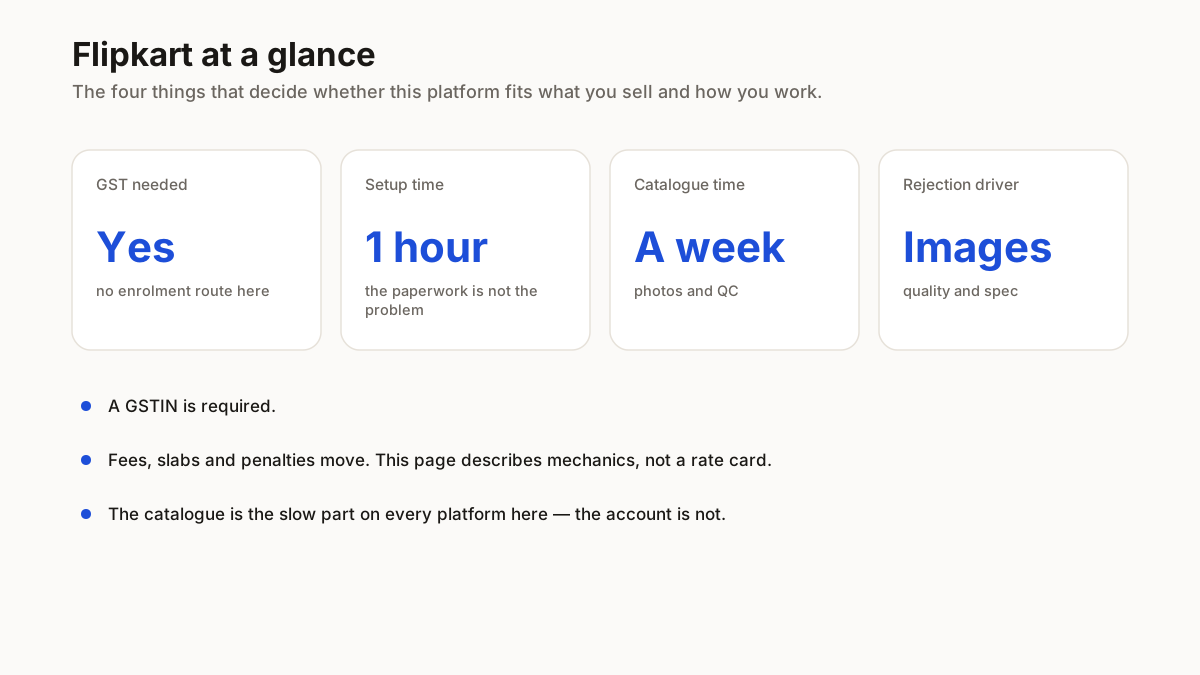
A full GST registration, for every category. Flipkart has no equivalent of the enrolment ID route, so if you have been selling on Meesho without GST, Flipkart is the point where you register properly.
You will also need to pick a fulfilment model at signup. Self-ship means you pack and hand over; Flipkart Advantage means your stock sits in their warehouse and they handle dispatch. The second wins the buyer trust badge and costs storage.
Listings are stricter. Flipkart matches against an existing catalog where one exists, so a product already listed by another seller has a fixed title and image set you attach to in place of write.
How does Account Health decide whether you stay?
Flipkart runs a seller scorecard, and breaching it is the main route to suspension. The metrics that matter are dispatch within the promised SLA, return and cancellation rates, and quality complaints from buyers.
Late dispatch is the one that catches new sellers. A single day's delay across a batch of orders moves the metric fast, and the platform reacts to trend rather than to any one order.
Watch the dashboard weekly instead of reacting to a warning. By the time a suspension notice arrives, the underlying number has usually been drifting for a month.
What sells better on Flipkart than on Meesho?
Anything where the buyer is comparing on specification and not on price alone. Branded apparel, footwear with sizing, electronics accessories and home goods all perform better here, because the Flipkart buyer reads the detail page.
The same cotton kurti that sells at ₹400 on Meesho can hold ₹650 to ₹900 on Flipkart if the listing carries proper images, a size chart and real specifications. That gap is the reason to run both.
Image quality does more work here. Flipkart displays larger images and its buyers zoom, so a soft photo that passed on a smaller listing grid will cost you the sale.
What does Flipkart QC actually look at?
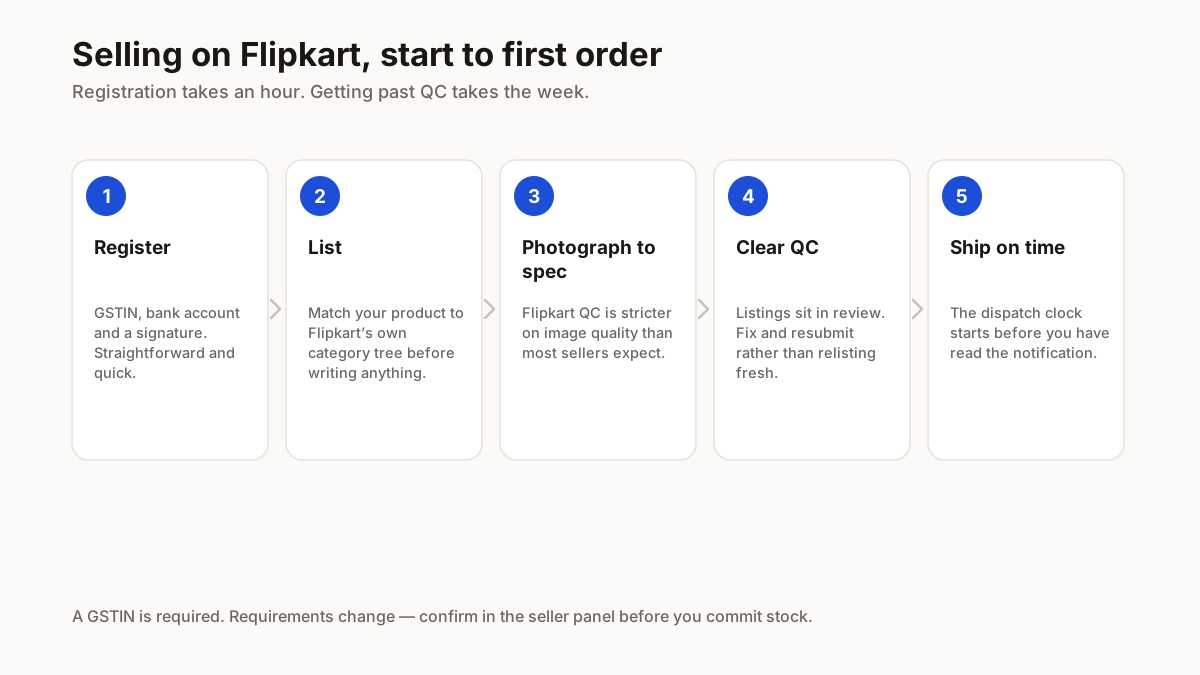
Image quality against a published standard, and it is stricter than most sellers expect coming from social selling. Resolution, lighting, background and the absence of anything overlaid on the primary image are all assessed, and a photograph that looks fine on a phone can fail on the dimensions alone.
Category placement is the second thing, and it is checked against Flipkart’s own tree rather than against what you called the product. A garment listed in the wrong node is hard for buyers to find and sometimes rejected outright, so matching the product to the category before writing anything saves a full cycle.
Attributes are the third. Flipkart asks for structured fields — fabric, fit, sleeve, occasion — and incomplete ones weaken the listing even when they do not fail it, because that is what the filters on the buyer side run against.
Listings sit in review while this happens, which is the part that feels slow. Fixing and resubmitting is faster than relisting fresh, and it keeps whatever the original listing had accumulated.
How is selling here different from Meesho?
The buyer arrives with more intent and more expectation. Flipkart traffic skews towards people who are deciding rather than browsing, which means a listing that answers questions properly converts better here than one that simply undercuts — and it means the photography standard is doing real commercial work rather than just clearing QC.
Registration requires a GSTIN outright, with no enrolment route. That is the practical gate for a seller starting out: if you have been selling on Meesho under an enrolment number, coming to Flipkart is a tax decision before it is a listing one.
Fulfilment options are broader, including holding stock in Flipkart’s own network, which changes both the cost structure and the delivery promise. Whether that is worth it depends entirely on your volume and how fast your stock turns.
And Shopsy sits alongside it as a value storefront on the same seller account, which is worth knowing before you conclude your price point does not fit here.
Related free seller tools
Frequently Asked Questions
Do I need GST to sell on Flipkart?
Yes, for every category. Flipkart has no enrolment-ID route like Meesho, so a full GSTIN is required before you can list.
What is the difference between self-ship and Flipkart Advantage?
Self-ship means you pack and hand over each order yourself. Flipkart Advantage means your stock sits in their warehouse and they dispatch, which earns a buyer trust badge and costs storage fees.
Why do Flipkart sellers get suspended?
Almost always a breach of the Account Health scorecard — dispatch outside the promised SLA, high return or cancellation rates, or quality complaints. The platform reacts to the trend, so watch it weekly rather than waiting for a warning.
Can I sell the same products on Flipkart and Meesho?
Yes, and most sellers do. The same item often holds a higher price on Flipkart because that buyer compares on specification in place of price alone, so run both not choosing.
Why can I not write my own product title on Flipkart?
Because Flipkart matches against an existing catalog where one exists. If another seller has already listed that exact product, you attach to their listing rather than creating a new one.
Are Flipkart images different from Meesho images?
The specification is similar but the display is larger and buyers zoom, so image sharpness matters more. A soft photo that passed on a smaller grid will lose you the sale here.
Do I need GST to sell on Flipkart?
Yes. There is no enrolment-number route as there is for several Meesho categories, so a seller moving across from Meesho faces a tax decision before a listing one.
Why do Flipkart listings sit in review so long?
QC checks image quality against a published standard, category placement against Flipkart’s own tree, and the structured attribute fields. Fixing and resubmitting is faster than relisting fresh and keeps what the listing had accumulated.
Rates and policies change. Check the current rate card in your seller panel before pricing — the structure above stays stable, the numbers do not.