What does Meesho charge a seller?
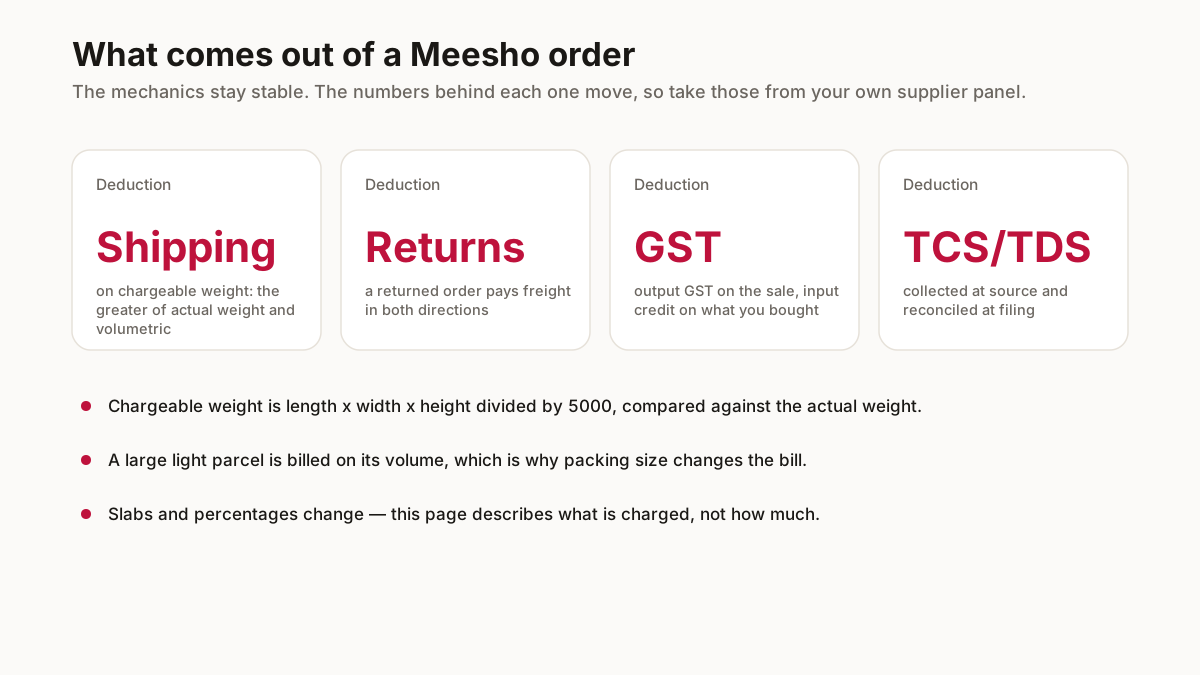
Commission on the sale price is zero for many categories. What you pay is shipping, calculated on chargeable weight, plus penalties where they apply and any charges tied to returns and cancellations.
Unusual, and it moves the whole margin question. Where a platform charges 15% commission, product cost dominates. Here, packing does.
Slabs move. Read the current card in your supplier panel before pricing — a price set against last year's numbers loses money quietly on every order.
How is the shipping charge calculated?
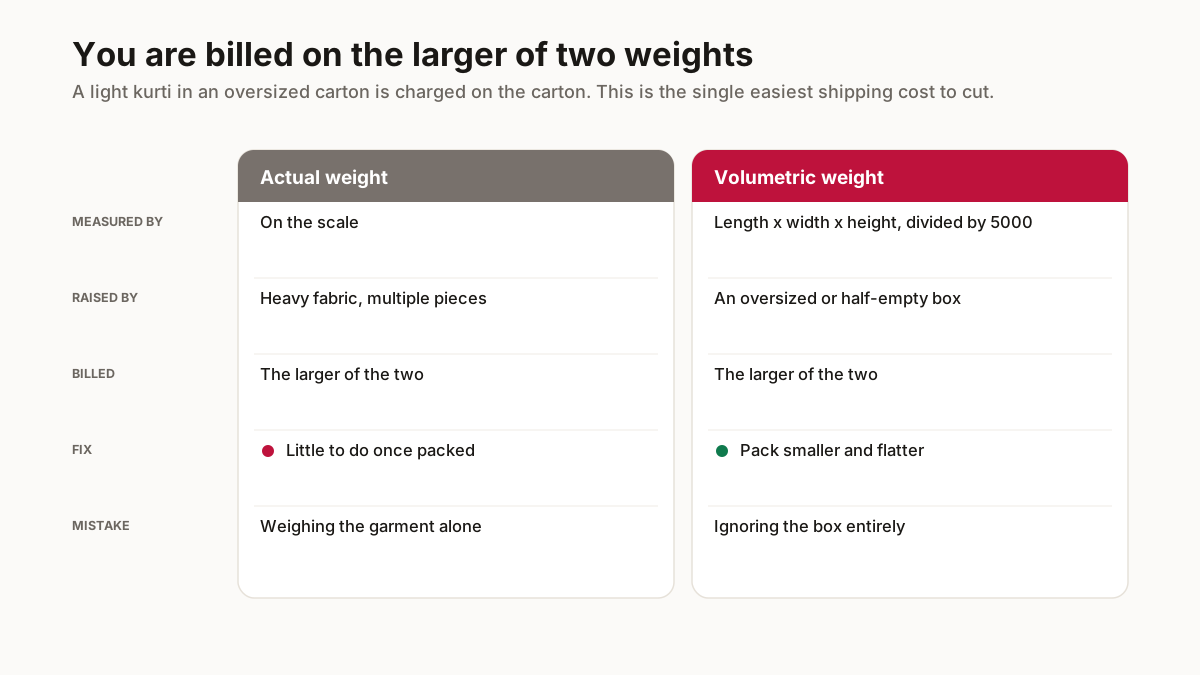
On the higher of two numbers: the parcel's actual weight, and its volumetric weight, which is length x width x height in centimetres divided by 5000. Whichever is larger decides your slab, and zone then sets the rate.
A 400g kurti in a 30 x 25 x 10 cm box has a volumetric weight of 1.5kg and bills at the 1.5kg slab. The same kurti in a 35 x 28 x 2 cm polybag comes to 0.39kg, so its 400g dead weight decides instead.
Roughly a kilogram of billed weight, removed by changing the mailer. Across 200 orders a month it is the largest single cost lever most Meesho sellers have.
What about penalties and the payment cycle?
Penalties attach to things the platform can measure: cancellations after confirmation, dispatch outside the window, wrong product sent, and quality complaints. Each has its own trigger and some are waivable on appeal.
Deductions land in the settlement report over arriving as bills, which is why sellers notice them late. Read the settlement in place of the order count.
Settlement runs on a cycle rather than per order. Plan cash flow against the cycle, not against the day the order shipped.
Why does the same product cost different amounts to ship?
Because the bill is calculated on chargeable weight, which is the greater of what the parcel weighs and what its size implies. The volumetric figure comes from length times width times height divided by 5000, so two identical garments in differently sized boxes are billed differently and the lighter-looking one can cost more.
This is the single most controllable line in a seller’s cost sheet. Packing flatter and smaller reduces the volumetric figure directly, and unlike a rate card it is entirely within your control. Sellers who switch from boxes to flat courier bags for soft goods often see the shipping line move noticeably.
Destination matters too. Local, regional and national zones are priced differently on every courier, which is why an order to the next district and one across the country carry different costs for the same parcel. If your sales skew to distant zones, your average shipping cost is higher than a single-zone estimate suggests.
Weigh a packed parcel rather than the garment. The difference between the two is the packaging, and packaging is the part sellers consistently forget to include when estimating what an order costs them.
Which deductions surprise sellers at settlement?
The return legs, most often. A refused parcel has travelled out and back, and both journeys are billed, so one return can cost more than the profit on the order that was delivered before it. Sellers modelling only successful orders find the settlement consistently below the spreadsheet.
Tax collected at source is the second. It is not a fee the marketplace keeps — it is reconciled when you file — but it does not arrive on settlement day, so a seller managing cash rather than accounting profit feels it as a shortfall.
The third is anything charged per order regardless of value. A flat fee is a small percentage of a large order and a large percentage of a small one, which is why low-priced items can fail to make money on a channel where expensive ones comfortably do.
All of these are visible line by line in the payments section of the supplier panel, and reading one month of it properly is more useful than any general guide, including this one. The mechanics stay stable; the amounts are yours to read.
Related free seller tools
Frequently Asked Questions
Is Meesho 0% commission?
For many categories the platform takes nothing from the sale price. Shipping is the real cost and it is charged on chargeable weight, so packaging instead of commission decides your margin.
How is Meesho shipping charge calculated?
On the higher of the parcel's actual weight and its volumetric weight, which is length times width times height in centimetres divided by 5000. Zone then sets the rate for that slab.
How can I reduce my Meesho shipping cost?
Lower the chargeable weight. A 400g kurti in a 30 x 25 x 10 cm box bills at 1.5kg; the same kurti in a 35 x 28 x 2 cm polybag bills at 0.4kg. Changing the mailer is the largest single lever most sellers have.
What penalties does Meesho charge?
They attach to measurable failures — cancellation after confirmation, dispatch outside the window, wrong product sent, quality complaints. They appear as deductions in the settlement report and not as separate bills, which is why sellers notice them late.
When does Meesho pay sellers?
On a settlement cycle rather than per order. Plan cash flow against the cycle in place of the dispatch date, and read the settlement report not the order count to see what you actually earned.
How is Meesho shipping weight calculated?
On chargeable weight — the greater of the actual weight and the volumetric weight, where volumetric is length times width times height divided by 5000. A light garment in an oversized box is billed on the box.
Why is my settlement lower than I calculated?
Usually returns and tax collected at source. A refused parcel is billed for both freight legs, and TCS is held back at settlement and reconciled when you file. Both appear line by line in the payments section of the supplier panel.
Rates, slabs and penalties change. Check the current figures in your supplier panel before pricing — the mechanics above stay stable, the numbers do not.