What are the actual steps to start selling on Meesho?
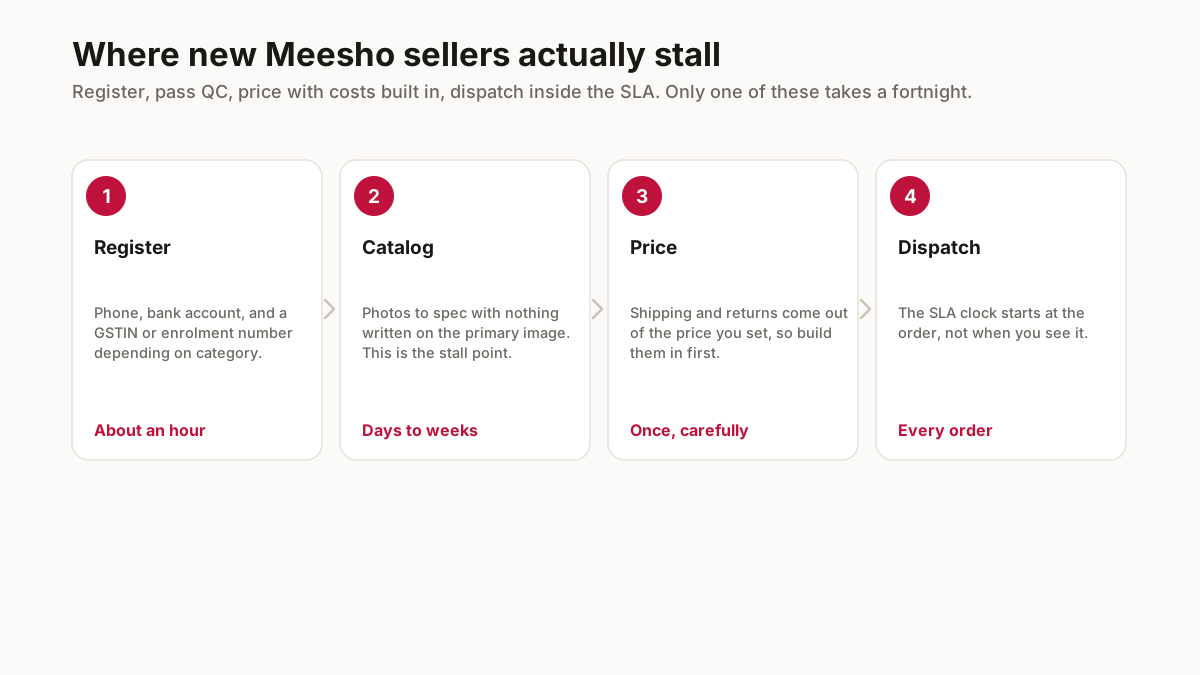
Five, and only one of them is paperwork. Register the account with a bank account and either a GSTIN or an enrolment ID. Photograph your stock at 1000x1000. Upload a catalog and survive QC. Price it with shipping and returns counted. Dispatch inside the promised window.
The account takes under an hour. The catalog is where weeks disappear, because a rejected catalog gives no sales at all and the rejection reason is often a single image rule.
Start with 10 to 20 products over your whole stock. A small catalog that passes teaches you the QC rules cheaply; 200 products rejected at once teaches you nothing and costs a fortnight.
How do you price so you actually make money?
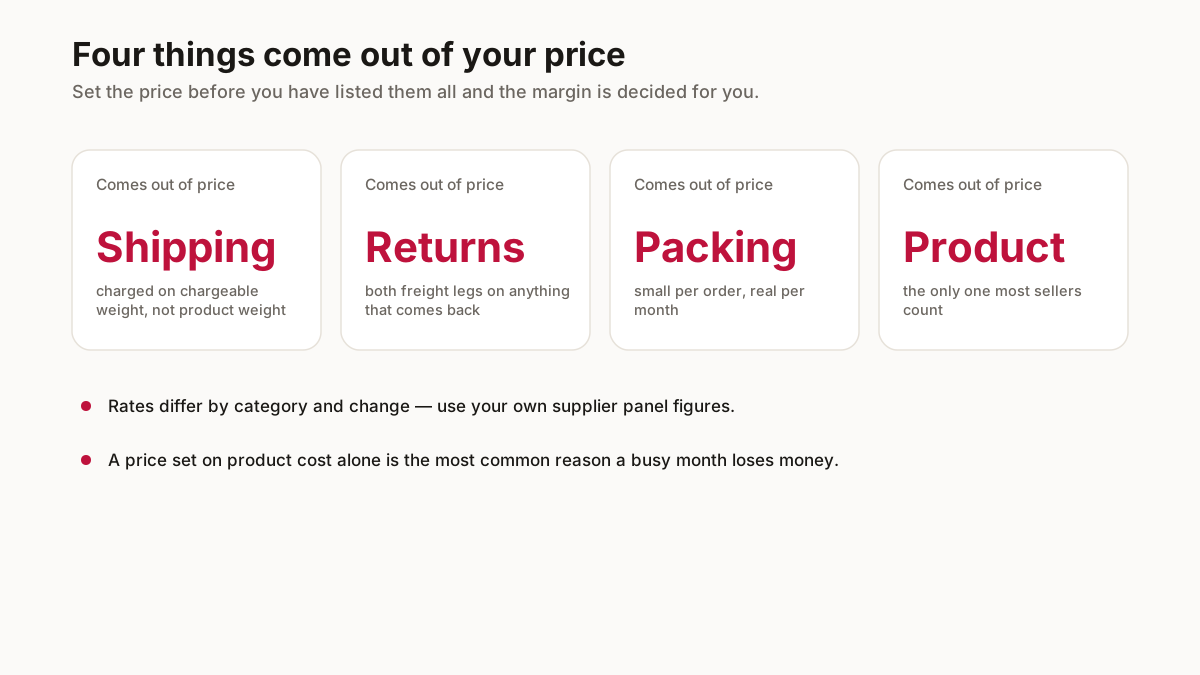
Work backwards from the settlement, not forwards from the cost. Your product cost, plus shipping on chargeable weight, plus a realistic share of returns, is the floor. Anything you add above that is margin.
Returns are the number sellers underestimate. Apparel commonly runs 15 to 25%, and a price that only works at zero returns loses money every month. Build the rate in before you list, not after you see it.
Shipping is charged on the higher of dead weight and volumetric weight, which is length x width x height divided by 5000. A 400g kurti in a box can bill at 1.5kg; the same kurti in a polybag bills at 0.4kg. That decision is worth more than most price changes.
What makes the first 30 days go well or badly?
Dispatch discipline. Meesho tracks how fast you ship, and the account that dispatches inside the window from day one builds the visibility that everything else depends on. Late dispatch early is expensive to recover from.
Answer the size question before it is asked. Publishing garment measurements rather than body measurements is the single change that most reduces apparel returns, and returns are what quietly decide whether the first month was profitable.
Do not run ads yet. Learn which of your 10 to 20 products actually move on organic placement first — paying to promote a product that does not convert organically just buys the same result faster.
What does the first month actually look like?
Front-loaded with waiting, and not in the places new sellers expect. The account itself is done in an evening — details, bank account, the category question — and then nothing happens, because nothing can happen until there is a catalog to sell. That gap is where most of the early frustration lives.
The catalog is the real month. Photographing a product properly takes longer than photographing it badly, and the difference between the two decides whether the listing passes QC and whether anyone buys. Sellers who rush this stage generally do it twice, which is slower than doing it once carefully.
Then a quieter wait while listings settle. A brand new catalog has no sales history, so it starts with nothing to rank on, and the first orders often arrive from search terms you did not anticipate. Read those terms when they appear — they tell you what your listing actually says to a buyer, as opposed to what you meant it to say.
Budget for a reshoot in the plan. Roughly one product in five turns out to have been photographed in a way that undersells it, and finding that out is a normal part of the first month rather than a failure of it.
What separates sellers who last from those who stop?
Knowing their numbers, more than anything else. A seller who can say what one order earns after shipping, returns and packing makes different decisions from one who is watching the order count — and the order count is the more satisfying number to watch, which is exactly the trap.
The second is dispatch discipline. The SLA clock starts when the order is placed, not when you notice it, and a habit of checking the panel at a fixed time each day is worth more than any amount of catching up at the weekend. Ratings recover slowly and cost you visibility while they do.
The third is treating returns as information. A style returning far above your own average is telling you something specific — the length is wrong, the colour photographed inaccurately, the size chart is optimistic — and that is fixable in a way that a general feeling of bad luck is not.
What separates them is rarely the product. Two sellers listing near-identical stock end up in very different places, and the difference is almost always in the photographs, the pricing arithmetic and the dispatch habit.
Related free seller tools
Frequently Asked Questions
How do I start selling on Meesho step by step?
Register with a bank account and a GSTIN or enrolment ID, photograph stock at 1000x1000, upload a small catalog of 10 to 20 products, price with shipping and returns built in, then dispatch inside the promised window. The account takes under an hour; the catalog is where the time goes.
Why does my Meesho catalog keep getting rejected?
Usually the image. Meesho rejects primary catalog photos carrying logos, watermarks, promotional text or price tags, and requires 1000x1000 pixels. Fix the image and the catalog usually passes on the next attempt.
How much should I price my products on Meesho?
Work backwards from the settlement. Product cost, plus shipping on chargeable weight, plus a realistic 15 to 25% return rate for apparel, is your floor. A price that only works at zero returns loses money every month.
How many products should I list first?
10 to 20. A small catalog that passes QC teaches you the rules cheaply. Uploading 200 products and having them all rejected costs a fortnight and teaches nothing.
Should I run Meesho ads as a new seller?
Not in the first month. Learn which products move on organic placement first — paying to promote something that does not convert organically only buys the same outcome faster.
What is the most common first-month mistake?
Late dispatch. Meesho tracks shipping speed and early visibility depends on it, so a slow first fortnight is expensive to recover from later.
How long does it take to start selling on Meesho?
The account takes an evening. The catalog takes the month — photographing products properly, passing QC, and then a quieter wait while new listings with no sales history settle. Budget for reshooting roughly one product in five.
Why are my Meesho listings live but not selling?
A new catalog starts with no sales history to rank on, so early orders arrive from search terms you did not plan for. Read those terms in the panel — they tell you what your listing says to a buyer, rather than what you meant it to say.
Rates, slabs and penalties change. Check the current figures in your supplier panel before pricing — the mechanics above stay stable, the numbers do not.